
Making America White Again
The Great Whitelash - Part One

I was only 25 years old when Barack Obama was first elected in 2008. At the time I was living in South Florida, which meant I was, in many ways, living inside a cocoon. Miami Dade County’s population is approximately 70% Latino or Hispanic, with Cubans making up over half of that demographic. While I had been harassed by police and called racist epitaphs by other kids as a teenager, those were isolated moments in my time there. Contrast that to my church trip to Alabama, where I experienced more discrimination in three days than I did living in South Florida for years.
When you live in such a bubble, it’s hard to experience the reality of white supremacist America. Of course, this bubble burst when years later I moved to Topeka and on my first month here I was called a racist term by an older white man because I was speaking Spanish to my grandma over the phone.
By the time I moved to the Midwest and encountered the “real America,” Obama was campaigning for reelection, and against all odds, he won again.
Those who have a penchant for revisionist history are quick to proclaim Obama’s victories as evidence of a post-racial America. The evidence, they claim, is right there: a Black man elected president not once, but twice. However, the truth is far from that. After Obama’s 20028 election, the backlash, or what I like to call the whitelash, was immediate.
There were hundreds of incidents after Obama’s first election, from “Cross burnings. Schoolchildren chanting ‘Assassinate Obama.’ Black figures hung from nooses. Racial epithets scrawled on homes and cars.”
A black church in Springfield, Massachusetts, was deliberately burned mere hours after the election because three white men were upset that Barack Obama was elected president.
I could fill the rest of this essay with just listing similar incidents across this country, in 2008 alone. Anti-government “Patriot” groups reached an all-time high in 2012, with a record number of 1,360, an 800% increase, as Obama was entering his second term. Stormfront, a long-time Neo-Nazi website, saw a dramatic increase on the night Obama was elected, where they lamented the state of the nation. Interestingly enough, they also saw an increase in traffic when Donald Trump was elected in 2016, with one user stating, “We finally have one of us in the White House again!” Their jubilation was obvious.
Trump a self-proclaimed sexual assaulter, a convicted felon, and a racist conman, encapsulates the id of white supremacy in our modern era. Let’s not forget that he became prominent in the political sphere by spreading the racist “birther” movement, falsely alleging that Barack Obama was ineligible to be president because he wasn’t a citizen. This of course harkens back to slave days and the Jim Crow era, when black men’s documents were never sufficient and had to be “verified” by white officials. The rise of the Tea Party was not simply about taxes or government spending; it was a direct repudiation of Obama himself and of the changing demographics of the country.
Obama endured all that and had to be nearly perfect, in order to even be a presidential candidate. One wife, one family, no scandals. Trump in contrast, was the extreme opposite, and still to this day, is lauded by white “Christians” as an example of virtue. As Ta-Nehisi Coates masterfully writes in his essay, “The First White President,” that’s the point of Trump’s election:
“But that is the point of white supremacy—to ensure that that which all others achieve with maximal effort, white people (particularly white men) achieve with minimal qualification. Barack Obama delivered to black people the hoary message that if they work twice as hard as white people, anything is possible. But Trump’s counter is persuasive: Work half as hard as black people, and even more is possible.”
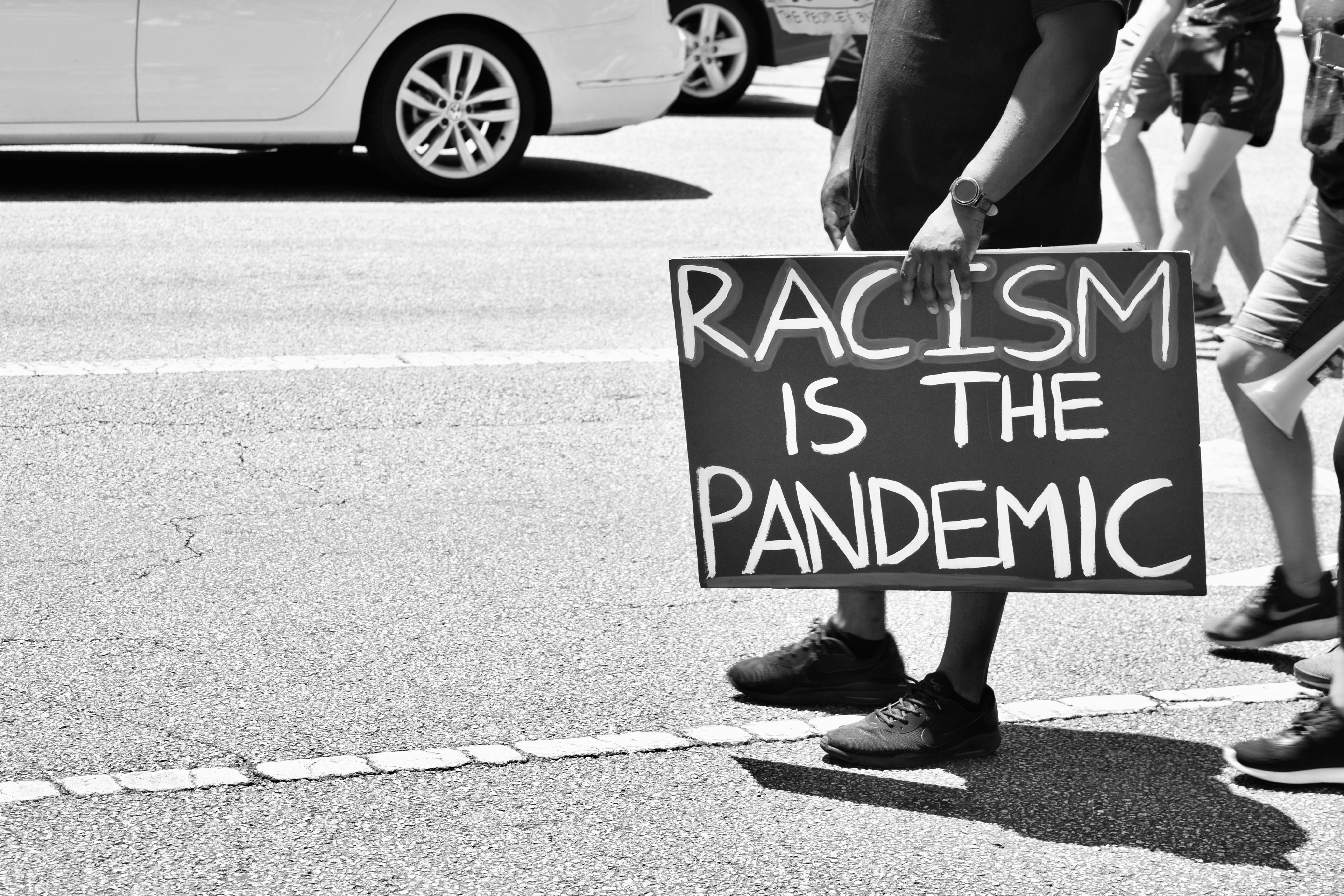
For some people, the militarization of ICE and their violence against immigrants and people of color is shocking. For those of us who have spent time reading American history, it feels grimly familiar. This is not an aberration. It is a pattern. Every time there has been some measure of progress for equality and justice, an intense and prolonged backlash has followed.
Reconstruction was met with lynchings, Black Codes, and the rise of the Ku Klux Klan. The civil rights movement was followed by mass incarceration, the Southern Strategy, and a decades-long political project designed to strip away its gains. Obama’s presidency was no different. Trump and his regime are the manifestation of this new form of white grievance.
This series of essays will trace that history of whitelash; from the collapse of Reconstruction, through Jim Crow, through the backlash to civil rights, and into our present moment. Not as an academic exercise, but as a way of understanding where we are and why these cycles keep repeating.
If we are not willing to be honest with our history and the “bloody heirloom” that is the power of whiteness, as Coates points out in his essay, we are condemned to perpetually relive these cycles without any hope of changing them. Knowledge is power. Preparation is wisdom. Organization is the only path forward.
This series is my attempt to contribute to all three.
This work will require reading from many primary sources, as well as distillation into a compelling and comprehensive narrative. Please, if you’re able to do so, consider upgrading your subscription.
Thanks for reading.
Sources:
Census data: https://www.census.gov/quickfacts/fact/table/miamidadecountyflorida/PST045224
Inside the Movement That Changed American Faith (my essay)
https://isanchez.substack.com/p/inside-the-movement-that-changed
Hate crimes incidents:
https://www.spokesman.com/stories/2008/nov/16/election-spurs-hundreds-of-racist-incidents/
Neo-Nazis Celebrate Trump:
https://www.asanet.org/news_item/unsurprising-alt-right/
https://www.tandfonline.com/doi/full/10.1080/19331681.2023.2262459
The First White President:
https://www.theatlantic.com/magazine/archive/2017/10/the-first-white-president-ta-nehisi-coates/537909/
Thank you for your writing. This is put together so well, and the collage of your story is important to hear. too. These stories tell me the realities of Topeka. That is very heartbreaking, that even speaking with your grandmother that happened.
“This is not an aberration. It is a pattern.” Powerful reminder; looking forward to your series.